
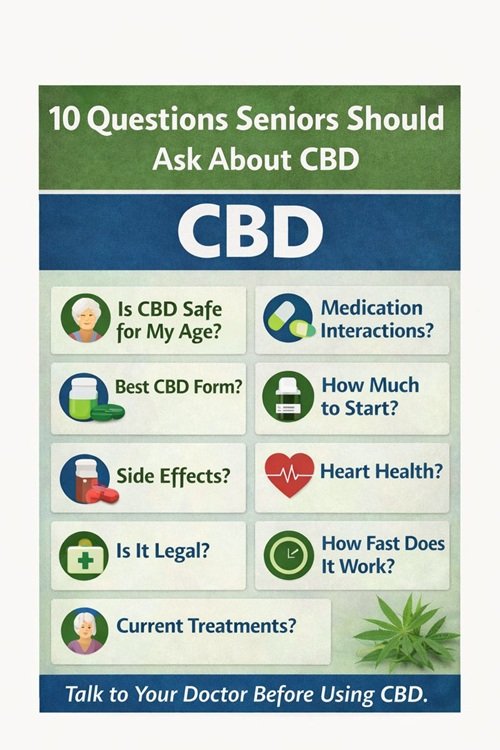
Questions Seniors Should Ask Their Doctor Before Taking or Using CBD…
CBD (cannabidiol) has moved from a niche product to a mainstream wellness supplement, offering potential relief for issues common in older adults, such as chronic pain, inflammation, anxiety, and sleep problems.
However, for seniors managing multiple health conditions and taking several medications, starting a new supplement requires careful medical guidance. The conversation with your doctor is not one to skip.
To help you prepare for a productive and safe discussion, here are 10 essential questions seniors should ask their healthcare provider about taking CBD.
🛑 1. The Critical Interaction Question
“How will CBD interact with my specific prescription medications, especially blood thinners, antidepressants, or heart drugs?”
This is the most important question for seniors. CBD is metabolized by specific liver enzymes (Cytochrome P450, or CYP450) that also break down many common medications. When CBD inhibits these enzymes, it can cause your prescription drugs to build up in your bloodstream, potentially leading to dangerous side effects or increased drug concentration.
- Key Action: Bring a complete, up-to-date list of all your medications, including over-the-counter drugs and herbal supplements.
⚖️ 2. Safety and Side Effects for Older Adults
“Is CBD safe for someone my age, and what side effects are more common in seniors?”
While CBD is generally well-tolerated, side effects like dizziness, drowsiness, and fatigue can increase the risk of falls in older adults. Seniors also process substances more slowly, meaning effects can last longer.
- Be Prepared to Discuss: Your doctor may want to monitor your liver function if you plan to use CBD regularly.
🎯 3. Effectiveness for Specific Symptoms
“Is there evidence that CBD can help with my specific condition—for example, my knee arthritis, restless sleep, or general anxiety?”
CBD is not a one-size-fits-all cure. Ask your doctor to evaluate the evidence for your specific symptoms. While research is growing for conditions like pain, inflammation, and anxiety, your doctor can provide a professional risk-benefit analysis tailored to you.
💧 4. Starting Dose and Monitoring
“What is the right starting dosage for me, and how will we monitor its effect?”
There is no standard, universally accepted dose for CBD. Your doctor can help you adhere to the “Start Low, Go Slow, Stay Low” principle common in medical cannabis programs.
- Ask For: A specific starting milligram (mg) dose, a titration plan (how often to increase the dose), and what you should track (e.g., pain levels, sleep duration).
🧪 5. Product Purity and Type
“Which type of CBD product should I look for (oil, capsule, or topical), and how can I ensure its quality?”
CBD is an unregulated supplement. Quality and purity vary wildly.
- Understand the Difference: Ask if you should use an Isolate (pure CBD), Broad-Spectrum (CBD plus other compounds, no THC), or Full-Spectrum (includes trace THC, <0.3%).
- Insist On: Discussing the importance of a Certificate of Analysis (COA) from a third-party lab to verify potency and check for contaminants like heavy metals or pesticides.
📉 6. Reducing Current Medications
“If CBD helps with my pain/sleep, could I potentially reduce the dosage of any of my current prescription medications, like pain relievers or sleeping pills?”
The goal is often to use the least amount of prescription medication necessary. Your doctor is the only person who should advise on reducing or stopping a prescription drug. Use CBD as a potential supplement, never as a replacement without medical sign-off.
🧠 7. Cognitive and Functional Impact
“Will CBD affect my ability to drive, focus, or increase my risk of confusion?”
While pure CBD is non-intoxicating, the risk of drowsiness, especially when combined with other sedating medications, is real. Discuss how you can safely perform daily activities while using CBD.
🩺 8. The THC Factor
“Should I be concerned about the small amount of THC found in full-spectrum products?”
Full-spectrum CBD contains legally trace amounts of THC. While this usually isn’t enough to cause a “high,” it may be a concern if you are subject to drug testing or are particularly sensitive to cannabis compounds.
🛑 9. When to Stop Taking CBD
“If I experience a new symptom, how can I tell if it’s the CBD or an underlying health issue, and when should I stop taking it immediately?”
Establish a clear communication plan. If you notice severe dizziness, new digestive issues, or worsening anxiety, you need to know when to pause the CBD and contact your provider.
⚖️ 10. Legality and Status
“Do you have a record of my CBD use, and does this have any implications for my medical chart or insurance?”
While CBD derived from hemp is federally legal, it’s wise to ensure your doctor documents your use. Transparency helps all your healthcare providers manage your care safely and avoid misinterpretations.
Don’t Be Shy: Be Empowered!
It is critical that you initiate this conversation. Many doctors may not proactively ask about CBD use, but they need to know to keep you safe. Bring this list, be honest about your intentions, and partner with your doctor to make informed choices about your wellness journey.
Read Blogs, Shop Products, Educational Materials…and Much More!
Please Shop our CBDPUre Affiliate Partnership Resources and Products Above if Interested…